MYRIAD GENETICS · SERVICE DESIGN STRATEGY · EMR INTEGRATION · ORG DESIGN
From Research to Org Design:
Launching Service Design Strategy at Myriad

The context
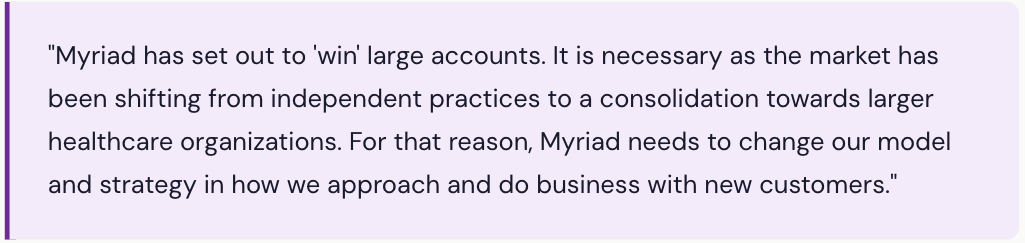
The healthcare market was shifting. independent practices were consolidating into large health systems, and Myriad Genetics needed to change how it sold, integrated, and delivered genetic testing services to keep pace. Large institutions don't buy the way small practices do. They have complex EMR environments, sophisticated procurement processes, and clinical workflows that require deep partnership, not just a product handoff.
Myriad had been doing point-to-point EMR integrations. These were one at a time, slowly, without a scalable model. Epic integrations were especially complex: each health system customizes its Epic instance differently, creating enormous variability. The integration backlog was growing. Sales teams felt lost in technical conversations. Customers were waiting or walking.
What WE DID
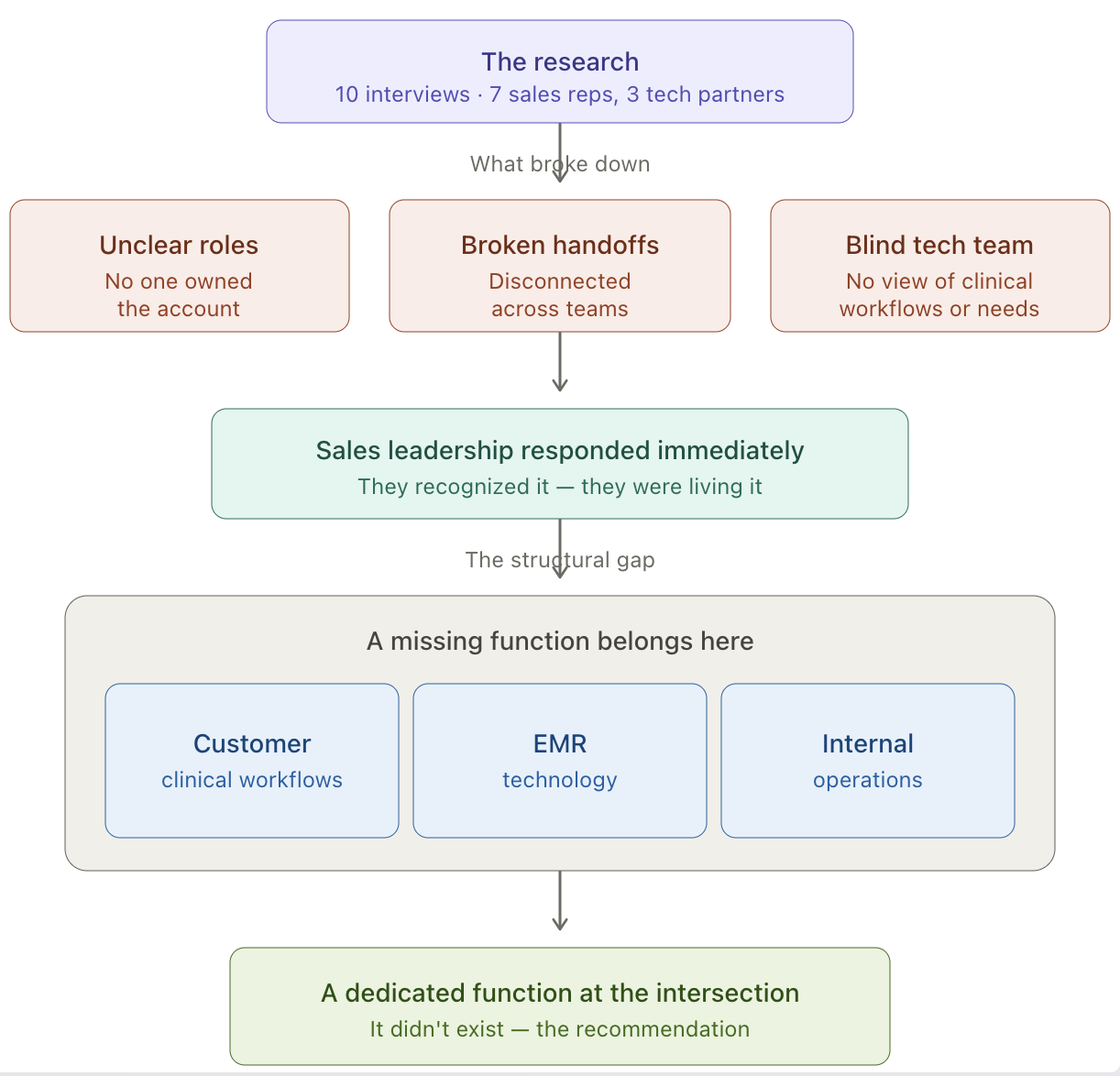
A research initiative I led with a product management partner set out to understand why Myriad was not winning in the large accounts space. We interviewed 10 people — 7 sales representatives and 3 technology partners — to understand what was breaking down and where.The findings revealed a system full of unclear roles, disconnected handoffs, and a technology team building integrations without visibility into clinical workflows or customer needs. Sales leadership heard the findings and responded immediately — they recognized what we were describing because they were living it.
The recommendations pointed to a structural gap: Myriad needed a dedicated function to sit at the intersection of customer clinical workflows, EMR technology, and internal operations. That function didn't exist.
Building the function: the Service Product Organization
The research created the conditions for a new organizational structure. The Service Product Organization was built to own the EMR integration lifecycle end-to-end — with dedicated functions for each layer of the problem.
1 Large Accounts Product Managers
Owner of the relationship with the Large Account Sales team. Focused on the initial investigation to confirm moving forward with a health system integration due to overwhelming list of customers requesting EMR integrations.
2 Service Design Strategy (my team)
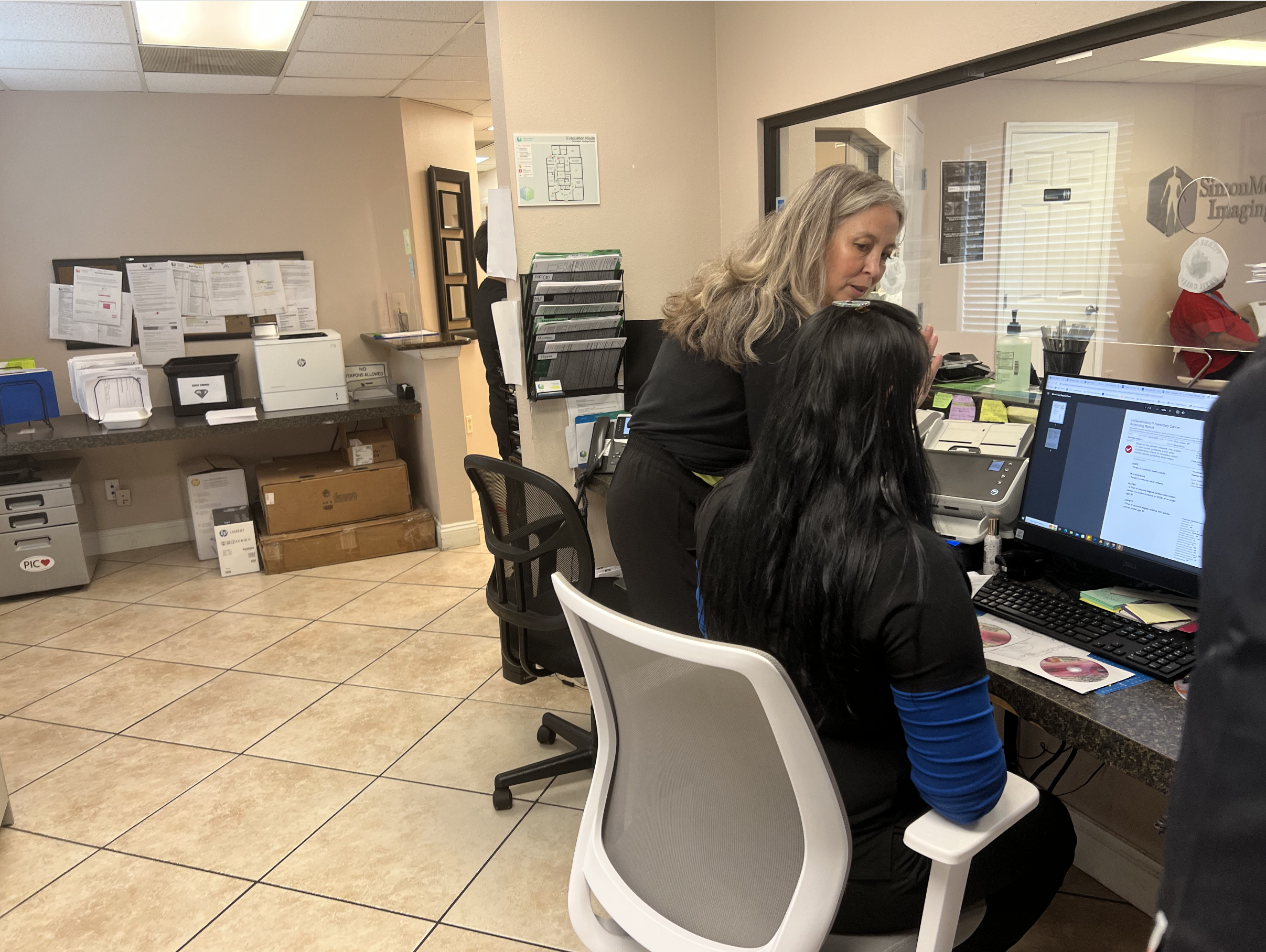
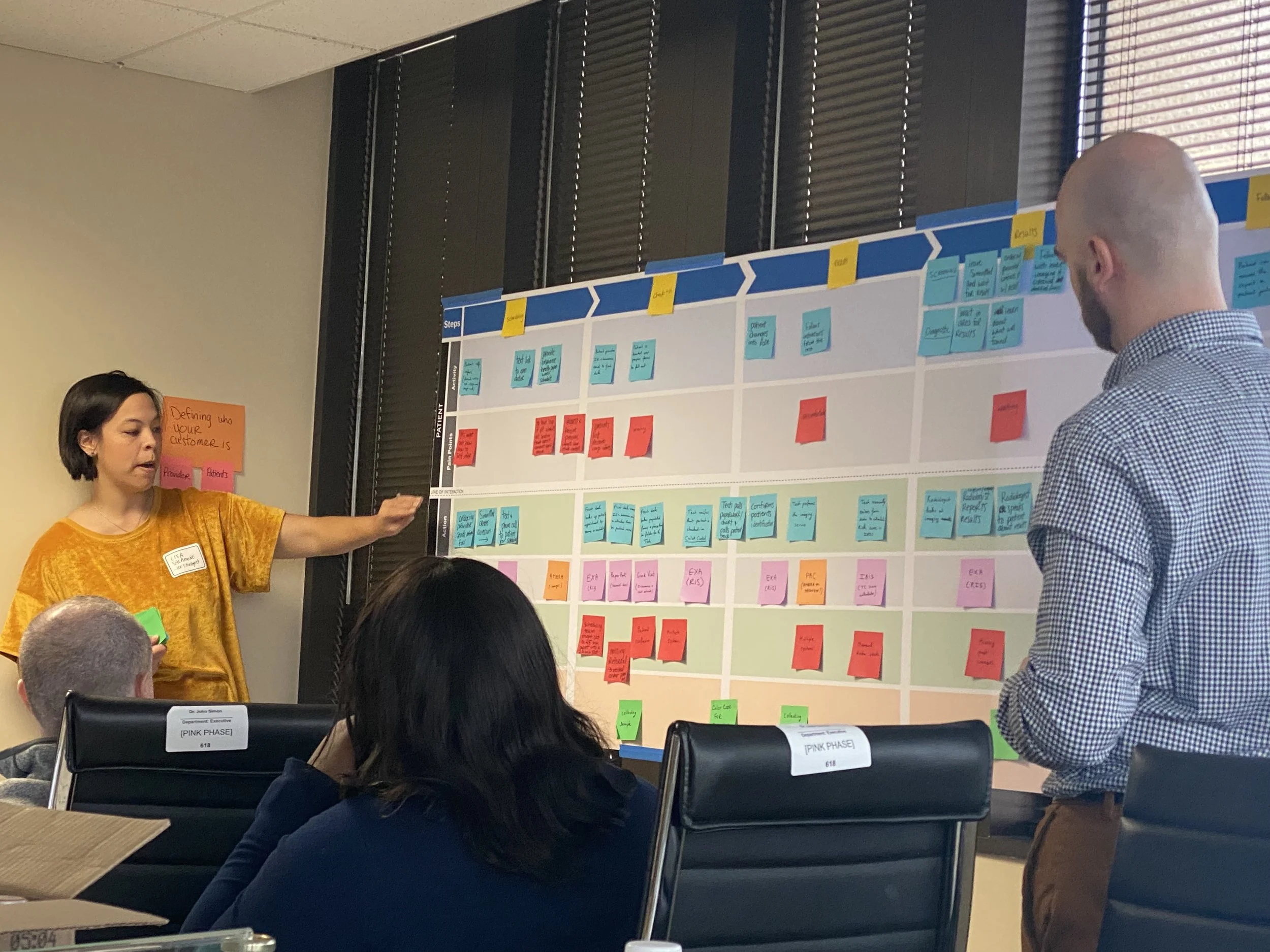
The function I built from scratch. Service designers embedded with customers to map current-state clinical workflows, build future-state blueprints, and translate what health systems needed into capability requirements Myriad could build against.
3 Epic Integration Team
Dedicated product managers and analysts focused exclusively on Epic — the most complex integration environment, where each health system's custom configuration requires deep clinical and technical partnership to build correctly.
4 Retail EMR Team
Focused on Athena, eClinicalWorks, Flatiron, and other platforms outside Epic — faster builds, more standardization, broader reach across smaller and mid-size institutions.
I was the first service designer in this structure. With leadership's confidence, I grew the team to four Service Design Strategists — each assigned two to three top accounts selected for their ROI potential, strategic opportunity, and interest in collaborative partnership.
The customer mapping work
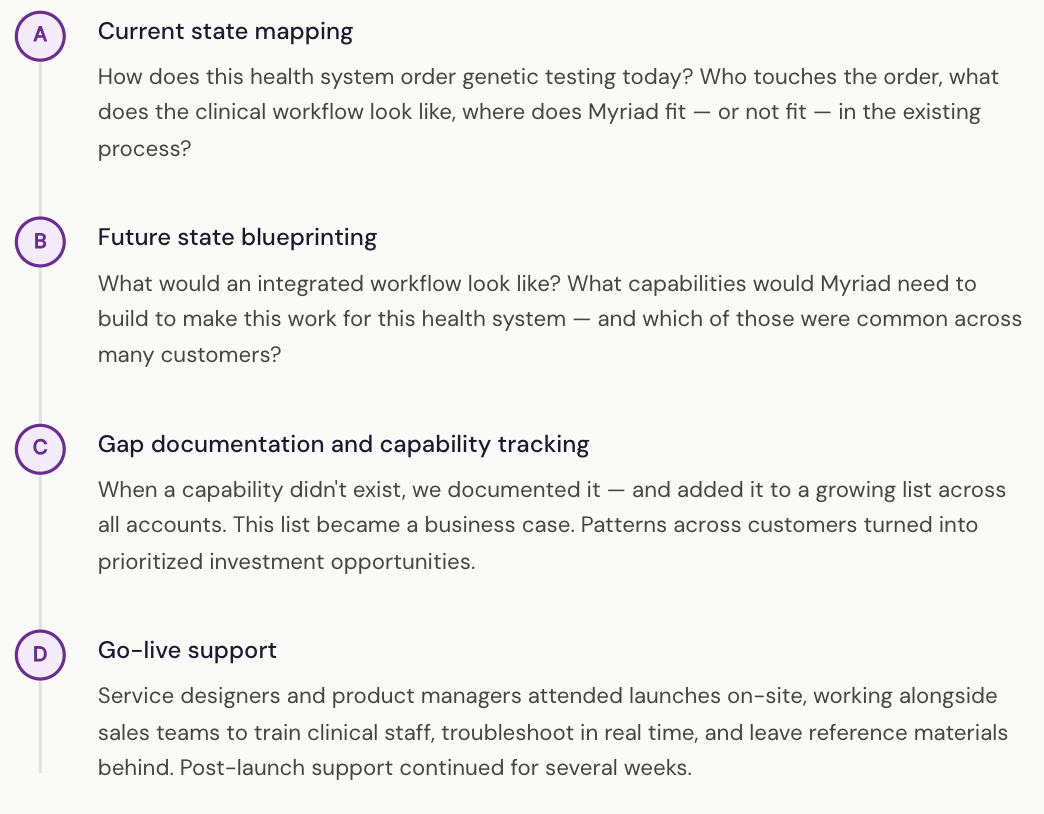
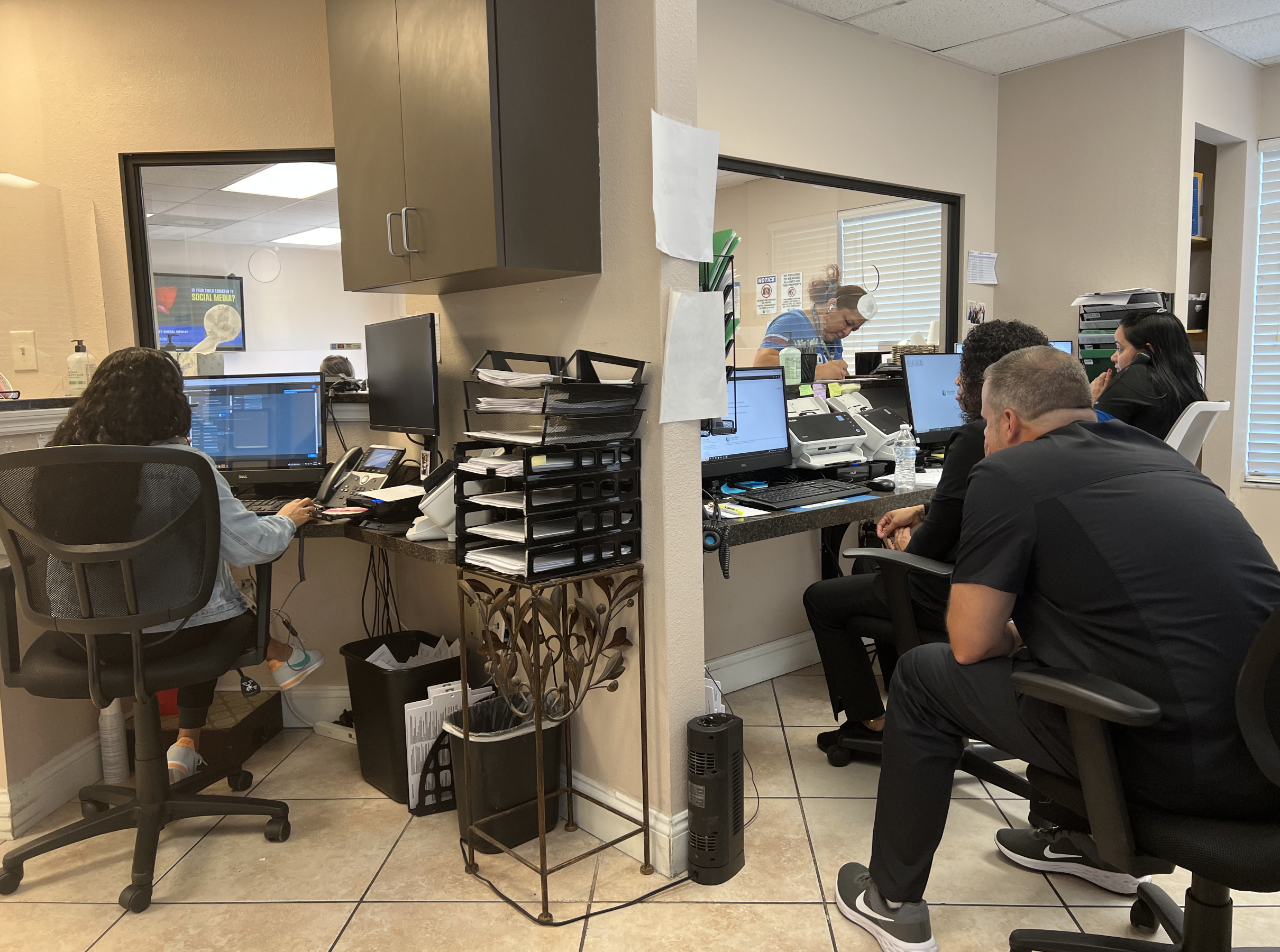
Service designers went deep with their assigned health systems. On-site visits and remote sessions with providers, genetic counselors, nurse practitioners, and clinical staff. The work had a consistent shape:
The pivot: turning inward
After about a year of customer-facing mapping work, a new pattern was emerging. The gaps we were finding with health systems weren't always solvable through better integration design — they were being created by Myriad's own internal systems and processes. A CRM that hadn't been meaningfully updated in decades. Operational workflows that had accumulated complexity no one had ever mapped end-to-end.
I recommended a pivot: shift the Service Design Strategy team's focus from customer-facing current/future state mapping to internal capability auditing. My director agreed.
The work looked different from the outside but used the same methods: observing internal operational teams, interviewing staff, mapping workflows, and surfacing the gaps that were creating friction for customers — before customers ever saw them.
Impact
Service Design Strategy function built from the ground up
Service Product Organization established as a recognized enterprise function, creating the first dedicated Product EMR integration team at Myriad
Customer mapping work conducted across top accounts, each assigned to a dedicated service designer for deep partnership
Capability gap list built from customer research became a standing business case that directly influenced the product roadmap
Sales teams more engaged and confident in technical conversations. The team reported higher satisfaction and comfort working with an EMR focused team
Service Design Strategy team later expanded scope to include new product development and enterprise improvement work, a direct result of the credibility built through this initiative