ISAAC
Improving sickle cell care for adults and adolescents in Chicago
Sickle cell disease puts complex patients inside a complex system. Over 12 weeks, our team brought human-centered design into an NIH/NHLBI-funded initiative — assessing existing tools, sitting with patients and clinicians, and telling the story of a care journey that the system itself had never fully seen.
Tools Assessment
Before immersing ourselves in the clinical setting, we conducted a thorough study of the tools available to sickle cell patients and caregivers, evaluated through a human-centered design lens against three criteria: usability, accessibility, and actionability for patients and caregivers managing a pain crisis.
The assessment, paired with clinical literature reviews, framed our understanding of the disease and its complexity of care — and started the list of design requirements for a "pain passport."


Primary Research
To create a genuinely useful tool, we needed to understand how people's interactions and mindsets shape sickle cell care — the human perspective the tools assessment couldn't reveal. We interviewed physicians, nurses, social workers, and community health workers, who shared their sickle cell journeys and gave feedback on digital tools.
We also conducted direct observations in the Emergency Department, the Sickle Cell Center, and a patient support group to build the case from the inside.

Analysis
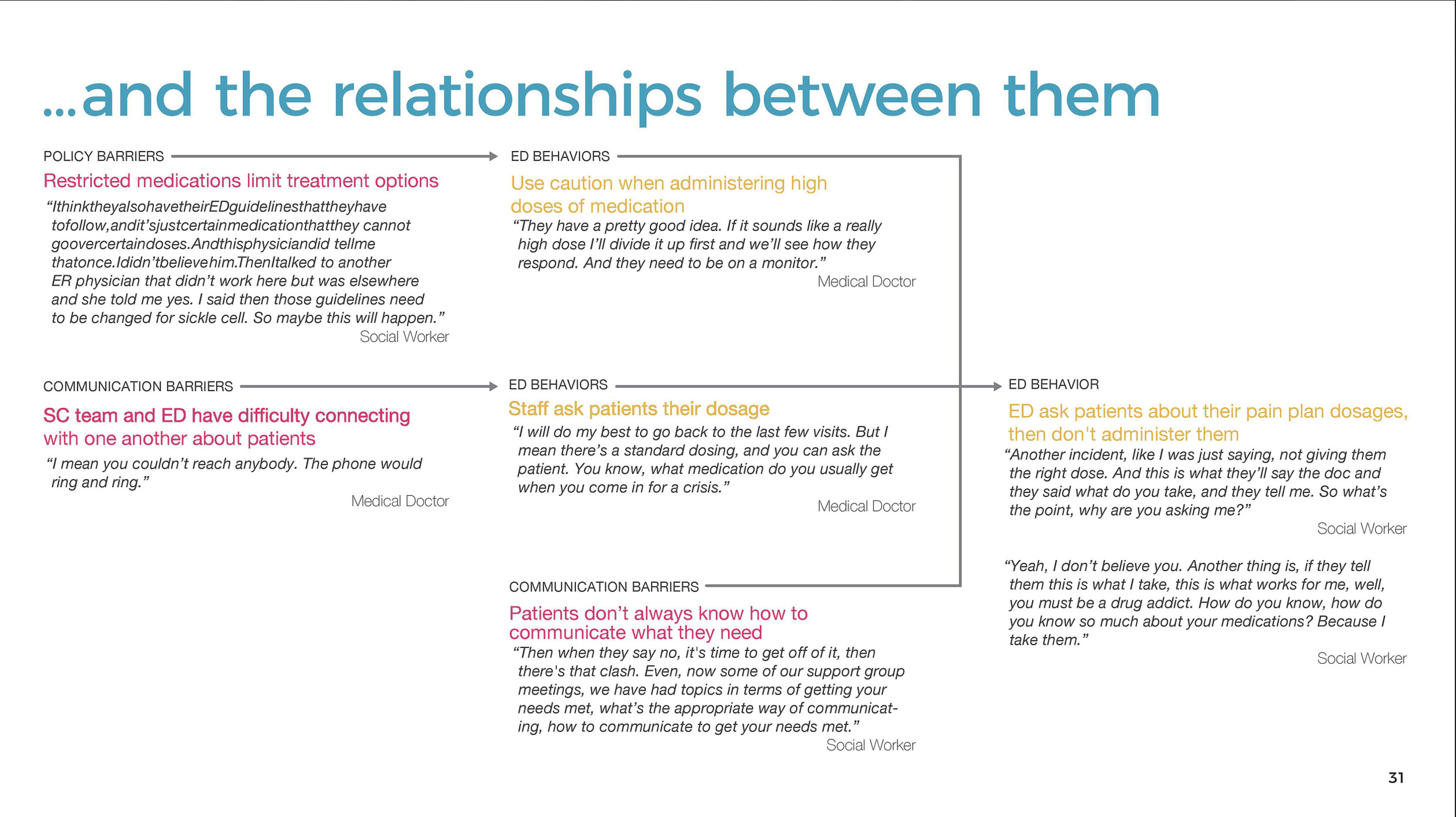
We organized the data from interviews and observations using two methods: grounded theory, and mapping barriers against facilitators. Building structure out of the large data set revealed patterns in behaviors, perceptions, and expectations across the patient care journey — findings that validated and extended our design requirements.
The Complex Patient in a Complex System
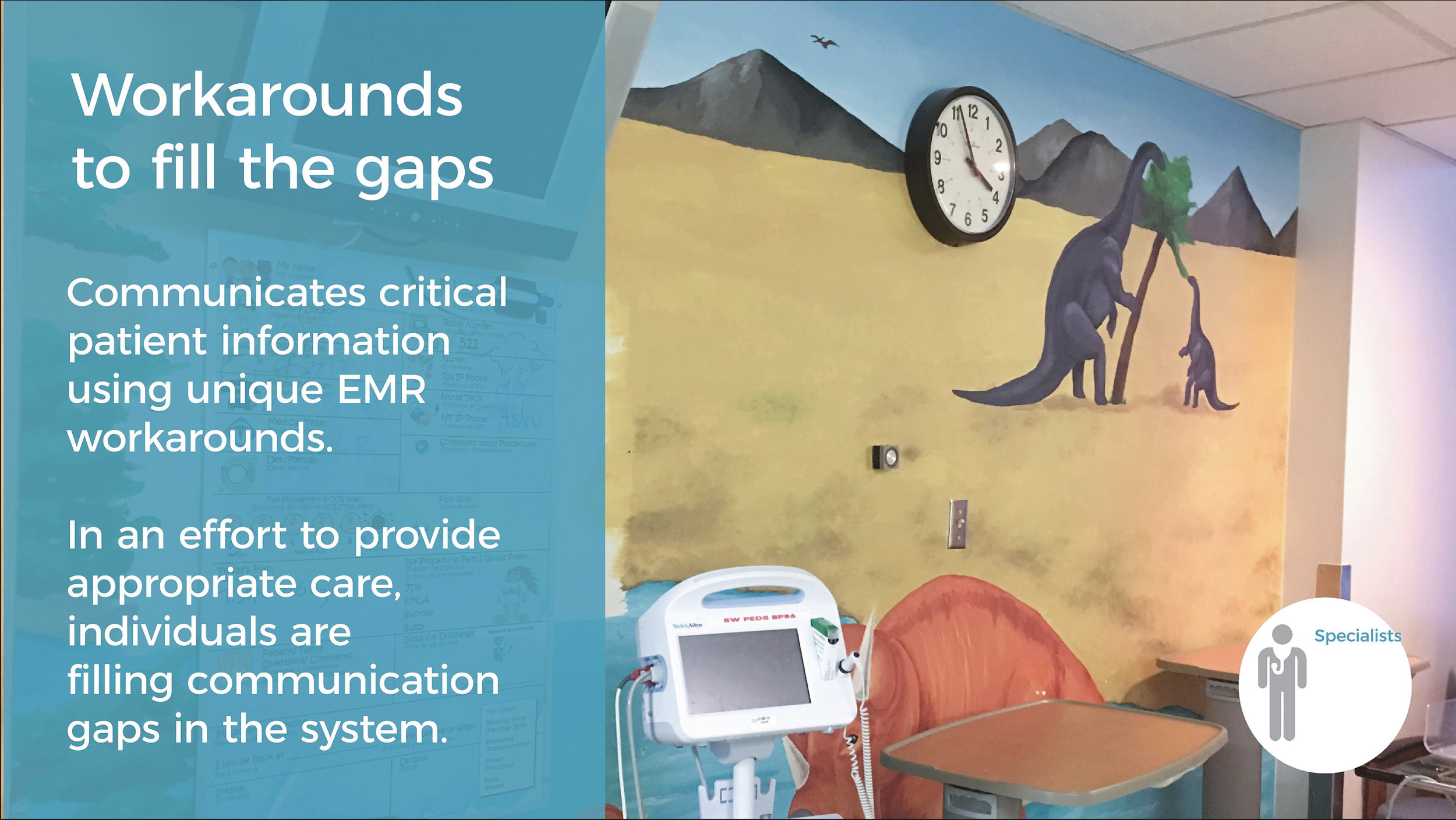
After 12 weeks, we presented the complex story of the patient journey and the disconnects within the system — conveying the perceptions and behaviors of patients and clinicians alike. Design was new to most ISAAC stakeholders, and many had questioned the resource allocation and value of the methodology.



Empathy changed the room
Once the findings were shared, mindsets shifted. The stories stakeholders heard built empathy that aligned everyone — clinicians, researchers, and administrators — around the value of design methods in healthcare delivery. A skeptical grant team left the presentation eager and energized to carry human-centered design into the next phases of the ISAAC initiative.