Caring for COPD
Juggling the chaos of everyday caregiving
Caring for someone with COPD is a full-time act of juggling — medications, appointments, equipment, emotions, and a life of one's own. This project made that invisible labor visible: turning a week of self-reported caregiver data into structured insight, a relational model, and a story platform that let stakeholders feel the chaos for themselves.
Structuring the Data
Ten COPD caregivers self-reported their daily routines for seven days, documenting their day-to-day care tasks through photography and a set of survey questions. The raw material was rich but messy — hundreds of photos, notes, and moments with no inherent order.
Every data point was coded against the "Quad 4" framework — activities, attitudes, ambitions, and anxieties — bringing structure to the mess and making a week of lived experience comparable across ten very different households.


Modeling the Data
The model takes the structured data and represents it visually, so that anyone — clinician, administrator, designer — can grasp the information and its insights at a glance. As the data took shape, patterns emerged connecting multiple caregivers who faced strikingly similar challenges, despite never having met.
 View full size →
The Story Platform
Data alone rarely moves stakeholders. The story platform was designed to captivate — pairing visual cues, direct quotes, and insights into the chaos of a COPD caregiver's day. Through this visual narrative, people outside the program could understand the challenges of a caregiver's life without ever having observed one.
 View full size →
A New Service Narrative
Building a narrative around people's experiences creates empathy and understanding — and in healthcare, the patient's journey is only part of the picture. Clinicians, caregivers, and the people behind the scenes all interact with and shape any new design. A sustainable service has to address the needs and expectations of every party at the table to succeed.


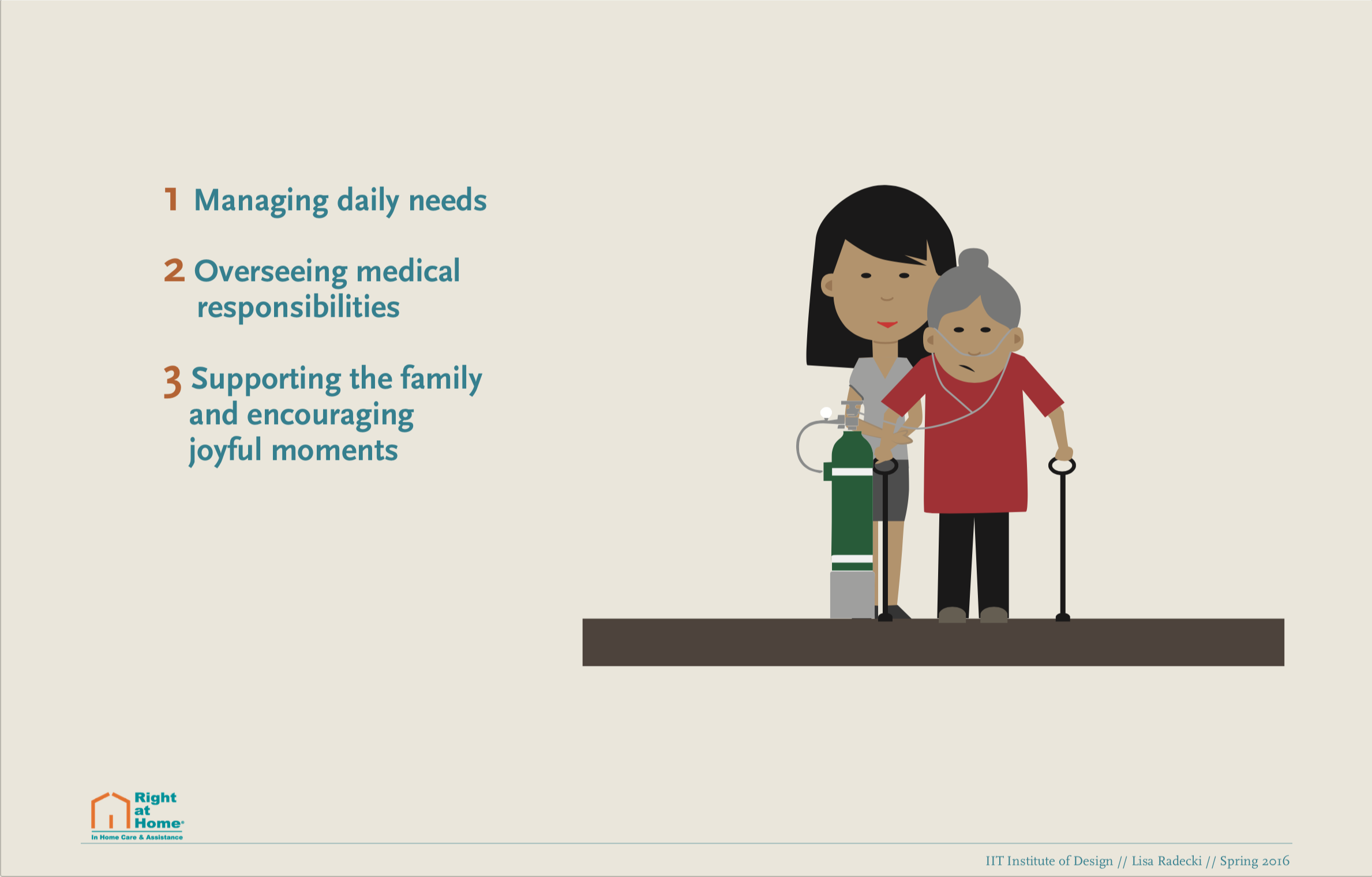


From anecdote to pattern
The Quad 4 framework and story platform gave the care team a shared, evidence-backed language for caregiver burden that hadn't existed before. Conversations shifted from individual anecdotes to visible patterns across households — and the new service narrative set up concrete concepts for how the system could better support the people doing the juggling.